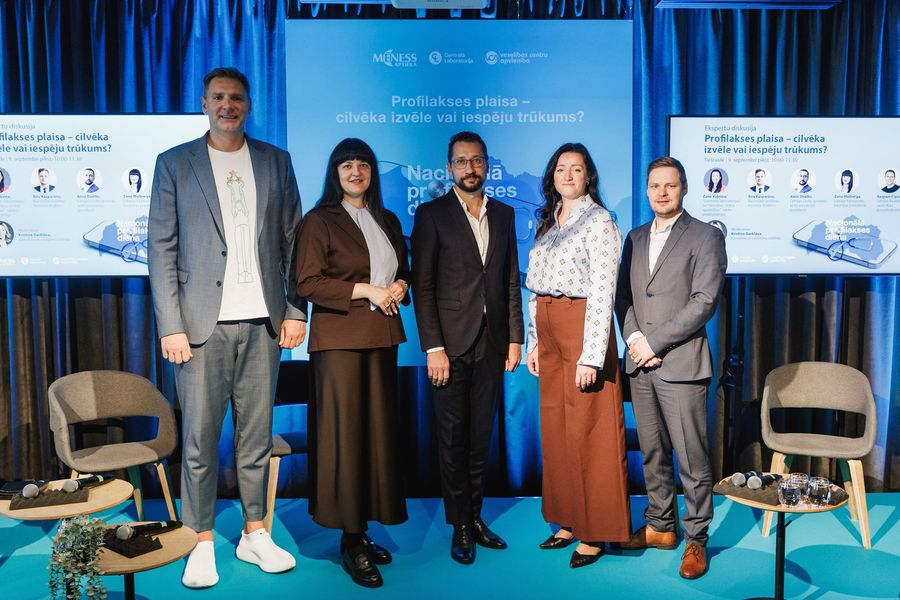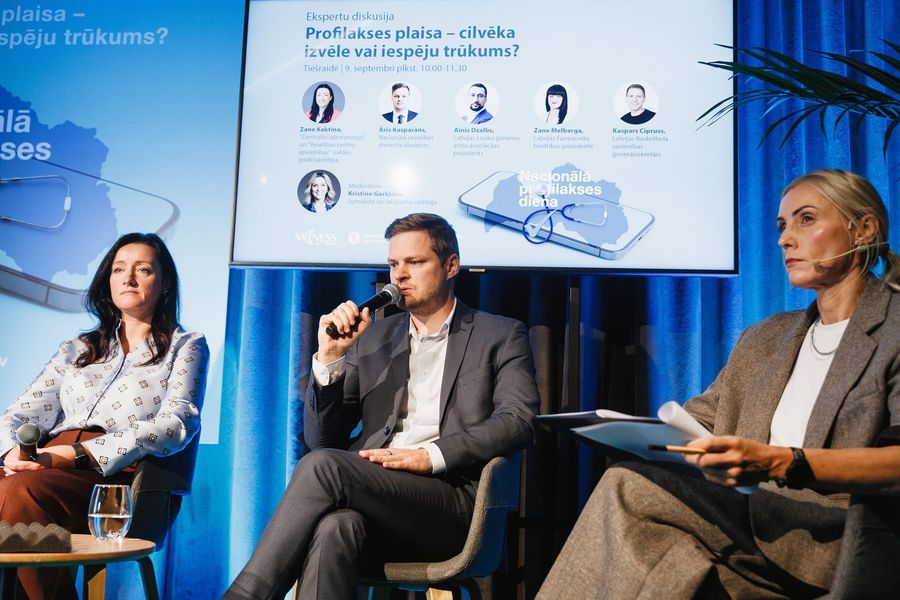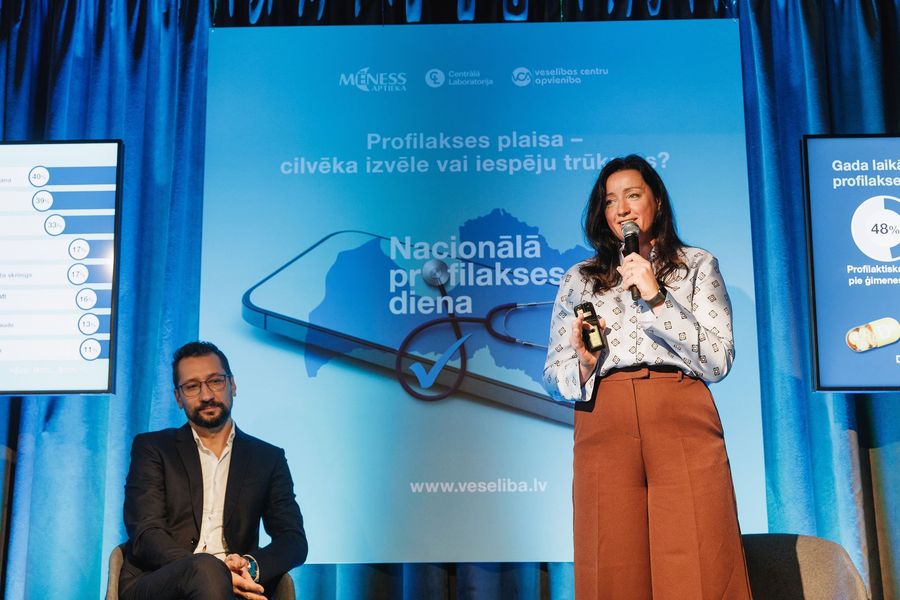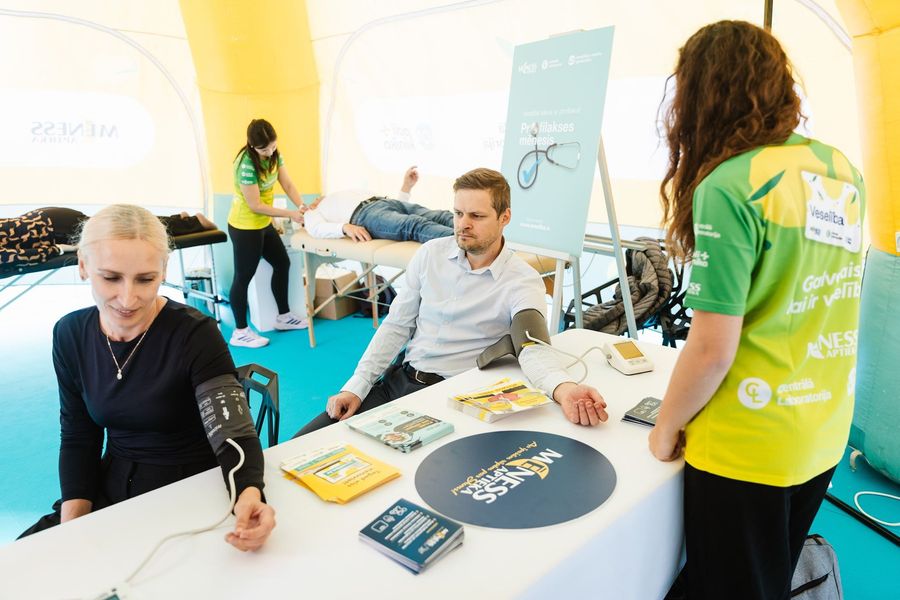
To raise awareness of prevention challenges in Latvia, promote greater public understanding of the importance of timely healthcare, and help reduce barriers to preventive health checks, healthcare companies Veselības centru apvienība (VCA), Centrālā laboratorija and Mēness aptieka, together with industry partners, have established National Prevention Day. The initiative was officially launched on 9 September with a presentation of the latest survey data on public health habits, followed by an expert discussion entitled “The Prevention Gap – A Matter of Personal Choice or Access to Opportunities?”
The prevention gap can only be narrowed through shared responsibility, experts concluded at the National Prevention Day discussion. People should make more active use of the preventive healthcare opportunities already available and avoid postponing care until symptoms emerge. At the same time, prevention needs to become easier to understand and more accessible, requiring a more convenient system for appointments and reminders, a clear overview of publicly funded preventive health checks, a straightforward patient journey and continuity of diagnostic care, as well as more equitable access to healthcare services across the regions.
Prevention Must Be Easily Accessible
Zane Kaktiņa, Chairwoman of the Boards of “Veselības centru apvienība” and “Centrālā laboratorija”, emphasized that there are always several reasons why people postpone preventive care – particularly in the areas, where accessing healthcare services requires people to plan both their travel and their time. “Prevention must be easy and convenient to access. Digitalisation can help people understand where and how to book health screenings, while healthy preventive habits should be encouraged from an early age. However, prevention cannot rely solely on individual initiative – there needs to be a clear, state-funded package of essential preventive services, personalised invitations to screenings, services available closer to where people live, and timely access to further diagnostics and treatment. It is also important to remember that every euro invested in prevention can save six euros in future treatment costs, as international studies have shown,” said Zane Kaktiņa.
National Health Service Director Āris Kasparāns acknowledged that the overall accessibility of healthcare services is limited by insufficient funding. At the same time, a portion of the funding allocated for preventive care within secondary healthcare remains unused each year and is reallocated to other services. “If a person has not visited their general practicionnaire during the year, they are entitled to a preventive health check-up once a year free of charge, with no patient co-payment. I encourage everyone to make use of this opportunity. At the same time, we all need to work together to increase awareness and participation in cancer screening programmes, as well as other preventive health checks,” said Āris Kasparāns. He noted that the referral system is currently being improved, and a solution is being sought to enable people to be invited to cancer screening electronically, alongside the invitation letters used to date.
Every Patient Interaction Should Also Be an Opportunity for Prevention
Ainis Dzalbs, President of the Latvian Association of Rural Family Doctors, noted that visits to family doctors are in high demand, but prevention is rarely the main reason for a consultation – people most often seek medical attention because of pain, symptoms, or another health problem that has already emerged. Therefore, every visit should also be used as an opportunity to discuss preventive health. He emphasized that patients often find the healthcare system insufficiently clear and easy to navigate, while greater use of digital solutions could help people receive timely information about the health checks they need and understand what steps to take next. “We need to ensure that knowledge about prevention translates into concrete action. At the same time, the system for follow-up examinations after screening also needs to be improved. If a person has to wait three to five months for the next examination after a screening test, this means prolonged stress and uncertainty. Patients need to know clearly where to turn, how to access the appropriate specialist, and what to do after receiving a diagnosis,” Ainis Dzalbs stressed.
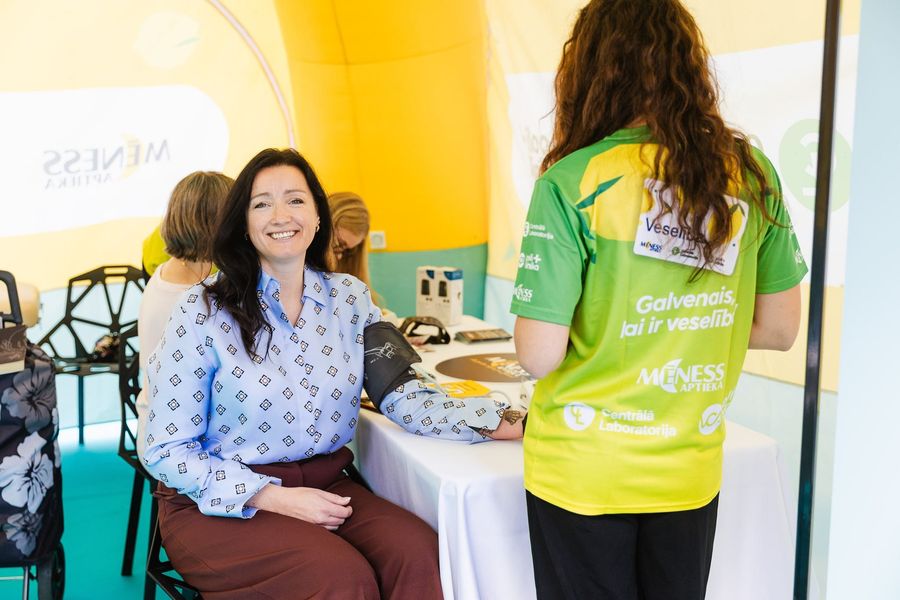
The aim of National Prevention Day is to promote prevention as a regular and accessible way for everyone to take care of their health by encouraging people to assess health risks in a timely manner, make use of available preventive care opportunities, and develop everyday habits that support a longer and healthier life. Throughout the National Prevention Month in September, people across Latvia will have access to a range of free events featuring expert advice and activities aimed at promoting better preventive health practices.